
Flying with a Toddler: What Actually Helps
The first time I went flying with a toddler, I packed like I was preparing for a natural disaster — half a suitcase of toys, snacks, and backup plans for backup plans. Most of it never left the bag. What actually got used was a much shorter list, and it wasn’t the stuff I expected going in.
If you’re staring down your first time flying with a toddler, or your fifth and still dreading it, here’s what actually earns its spot in the bag. Here’s what to skip, and how to get through the flight without it feeling like a two-hour negotiation.
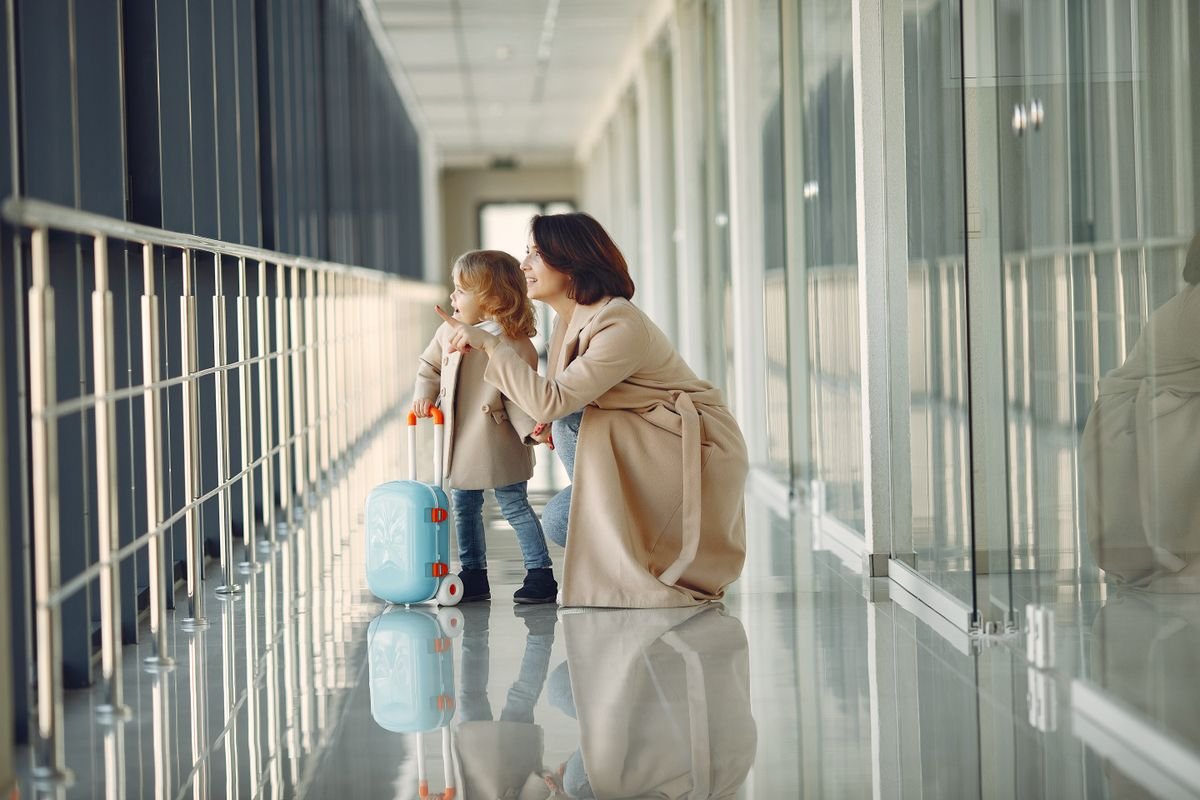
Booking the Flight When Flying with a Toddler
A few decisions made before you even pack matter more than anything you put in the bag when flying with a toddler:
- Book around nap or bedtime if you can — a flight that lines up with when they’d normally be sleeping anyway does half the work for you
- Choose direct flights when the price difference is reasonable — one takeoff and one landing beats two of everything, including two chances for a meltdown during boarding
- Pick seats before you get to the gate — a window seat gives a toddler something to look at; an aisle seat gives you an easier exit for bathroom trips and pacing during a rough stretch
- Don’t count on an empty middle seat — flights are fuller than they used to be, and it’s safer to plan as if you’ll have every seat filled
What Actually Earned a Spot in the Diaper Bag
Here’s what made the cut after a few trips of flying with a toddler and plenty of trial and error:
- A compact umbrella stroller that’s light enough to fold one-handed and gate-check at the last second
- Spill-proof snack cups. Regular snack cups turn upside down. Ones with a soft valve lid mostly don’t
- One or two small new toys, wrapped or in a bag. The novelty buys more quiet time than anything already in their regular rotation
- Kid headphones sized for a toddler. Even if you don’t use screen time much at home, a flight is a reasonable exception. The volume-limiting kind matters for little ears
- A full change of clothes for the toddler, and a spare shirt for yourself. You will regret skipping the second one exactly once, and then never again
- Travel-size wipes and a small trash bag — for reasons that need no further explanation
Snacks That Actually Worked
Not all snacks are equal when you’re flying with a toddler at 30,000 feet. The ones that worked had one thing in common: they took time to eat.
- Squeeze pouches — slow, mess-contained, and useful during takeoff and landing (see below)
- Puffs or crunchy cereal in a spill-proof snack cup. One piece at a time buys more minutes than a handful of anything
- Dried fruit or fruit snacks — easy to portion out slowly, one at a time, for the same reason
- A new snack they’ve never had before — the novelty works the same way a new toy does
What didn’t work as well: anything crumbly that scatters (goodbye, goldfish crackers, everywhere). Also skip anything sticky that ends up on the seatback screen, and anything that needs to be kept cold.
One trick worth packing for specifically: give a bottle, sippy cup, or pouch during takeoff and landing. The sucking and swallowing motion helps with the ear pressure. That pressure causes a lot of the crying during those two stretches of the flight.
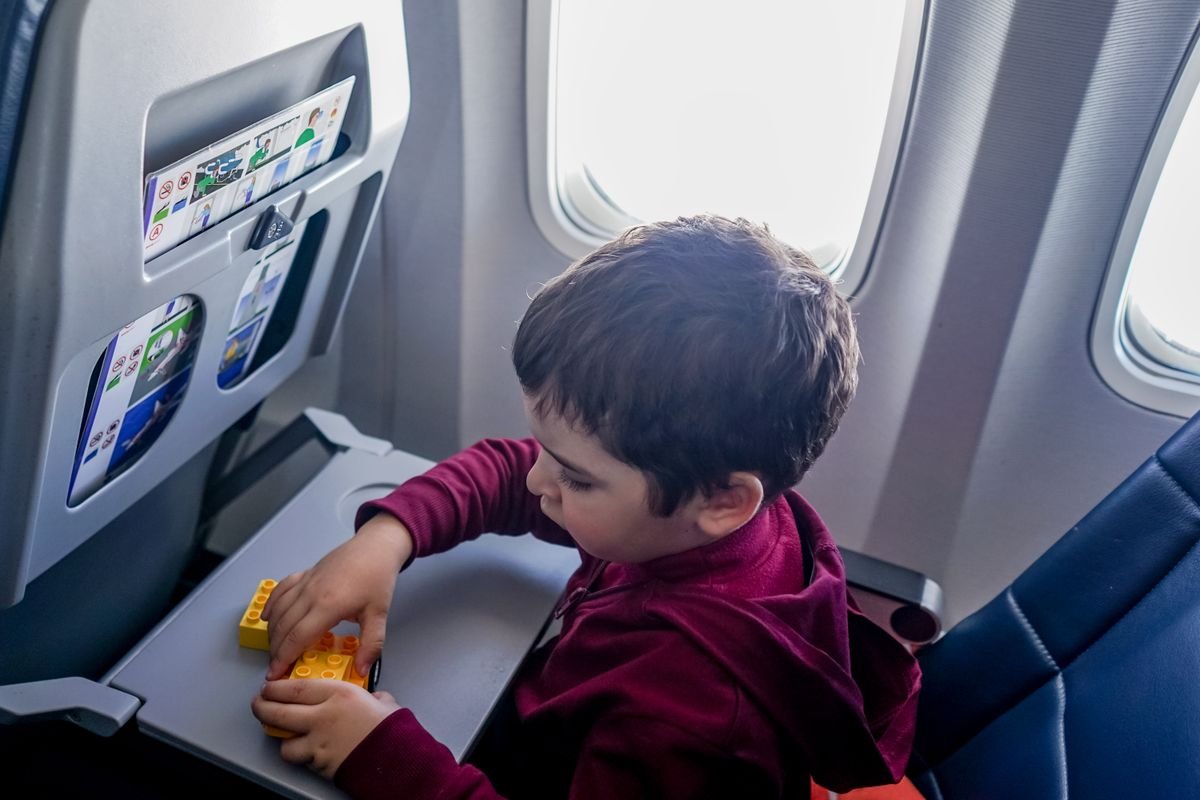
Things to Do to Keep Them Entertained
A rotation beats one big toy when flying with a toddler. Small, low-mess activities that come out one at a time, spaced through the flight, hold attention far longer than dumping everything out at once:
- A soft, reusable sticker book. Stickers that peel off and restick are close to endless entertainment, for the mess of a single page of stickers
- A small busy book or quiet book with zippers, buttons, and latches to fiddle with
- Window clings. They stick right to the airplane window and can be rearranged over and over
- A magnetic drawing pad. No loose pieces, no crayons rolling under the seat in front of you
- A small figurine or two that’s new or has been put away for a while, so it feels new again
- Board books. Heavier than paperbacks, but they survive being thrown, which matters more than you’d think
Bring these out one at a time, not all at once. A new activity every 20–30 minutes resets their attention in a way that having everything available from the start doesn’t.
Screen Time: How Much Is Too Much
I’ll be honest here instead of pretending we don’t use screens on flights: we do, and I don’t feel bad about it. Screen time is not the hill to die on when you’re flying with a toddler. A loaded tablet with a few downloaded shows and a good pair of kid headphones is a completely reasonable tool for a long flight. It works especially well after the toy rotation has run its course.
What actually matters more than how much: having shows already downloaded before you leave. In-flight wifi is not reliable enough to count on. Also test the headphones at home first, so you’re not troubleshooting Bluetooth pairing at 30,000 feet.
Getting Through Airport Security When Flying with a Toddler
Kids under 12 can usually keep their shoes on through standard screening, and strollers and car seats go through the X-ray belt or get a visual inspection. Fold the stroller if you can before you reach the belt. It moves things along faster and avoids holding up the line while you figure it out under pressure. TSA’s own Families on the Fly guidance covers what to expect at the checkpoint if this is your first time going through with a toddler.
If you fly often enough that the security line itself is the main source of dread, it’s worth reading our guide to TSA PreCheck. Kids 12 and under can use the PreCheck lane with an eligible parent, even without their own membership. The shorter, less rushed line makes a real difference with a toddler in tow.
Surviving a Layover with a Toddler
A layover sounds like extra time to dread, but it can actually be a reset button if you use it right. A toddler who’s been contained in a seat for a few hours usually needs to move more than they need anything else.
- Find an empty gate area and let them walk or run. Burning off restlessness before the next flight makes a real difference for the second leg
- Look for a kids’ play area. A growing number of larger airports have a small play structure tucked into a terminal. It’s worth a quick search for your connecting airport before you go
- Use the moving walkways as entertainment, not just transportation. It’s a genuinely reliable source of toddler delight, and it’s free
- Treat a layover meal as part of the day’s novelty. A snack from an airport shop they don’t normally get is an easy, cheap win
If your connection is under 45 minutes, skip all of this. Just focus on getting to the next gate. A rushed transfer isn’t the moment to let them wander.
Managing the Actual Flight with a Toddler
A few things that made the flight itself go smoother:
- Board last if you’re allowed to. It means less time trapped in a seat before the flight even starts
- Expect a meltdown, and don’t panic when one happens. It’s not a reflection of your parenting at 30,000 feet. Most fellow passengers are more understanding than the anxiety in your head is telling you
- A small note or treat for nearby passengers is a nice touch, not a requirement. Do it if it makes you feel better, and skip it if it feels like one more thing on your plate
- Get up and walk the aisle during the safe periods. A few minutes of movement resets a restless toddler more than another toy will
One thing that helped more than I expected: lowering my own expectations for the flight before it started. A flight counts as a win if the toddler stays in their seat, eats something, and doesn’t hurt themselves or anyone else. It’s not one where they sit quietly the whole time like a tiny, well-behaved adult. That mental shift took more stress off me than any single item in the bag.
What I'd Pack Differently Next Time
- I overpacked toys and underpacked snacks. Snacks bought more quiet minutes per ounce of bag space than any toy did.
- I brought loose crayons once. Never again — they roll, they get lost under seats, and picking them up mid-flight is its own kind of stressful.
- I didn’t download shows ahead of time on an early trip and paid for it when the wifi didn’t work. Now it’s a pre-flight checklist item, not an afterthought.
- I used to pack the diaper bag the night before. Now I pack it two days before, so I’m not scrambling to remember something obvious at 6 a.m.
Frequently Asked Questions
What age is hardest to fly with?
Most parents find somewhere between one and two the toughest. It’s old enough to want to move and resist being held, but too young to understand why they can’t.
Should I bring the car seat or gate-check the stroller?
If your toddler is used to their car seat, bringing it onto the plane can mean a more familiar, contained space to sit in. That requires a seat you’ve purchased for them. If you’re traveling with a lap infant or toddler and want to travel lighter, gate-checking both the stroller and car seat is usually free. It also keeps your hands free through the airport.
Do toddlers need their own seat?
Under 2, they can usually fly as a lap infant or toddler for free or at a reduced fare. A purchased seat with a car seat is generally safer and more comfortable for everyone, especially on longer flights.
What if they cry the whole flight?
It happens, even with a full bag of tricks. Most flights are only a few hours. Most passengers have either been there themselves or will be someday, and it’s rarely as loud or as long as it feels from your seat.
Is it worth paying more for a direct flight with a toddler?
In most cases, yes. The cost of a layover isn’t just the extra time. It’s an extra takeoff, landing, and gate transition with a tired toddler, and that’s usually worth paying to avoid.
What’s the single most useful thing to pack?
If I had to pick one, it’s the spill-proof snack cup. It does double duty as both food delivery and a slow, hands-on activity. It’s the item I’ve never once regretted packing.